
Most businesses don’t think about water until it starts interfering with something.
It’s rarely dramatic. No alarms, no sudden shutdowns. Just a quiet shift—equipment not performing quite the same, maintenance calls becoming more frequent, or processes taking a little longer than usual.
At first, it feels like a coincidence.
But over time, those small disruptions start pointing in the same direction.
Water.
And once you begin looking at it that way, you realize just how much it influences everything happening behind the scenes.
The Invisible Backbone of Daily Work
Water plays a role in more operations than most people realize.
It’s part of cleaning systems, cooling processes, production lines, and even the final quality of products or services. Whether you’re running a manufacturing plant, a food business, or a commercial facility, water is always there—quietly doing its job.
Because it’s so constant, it’s easy to take for granted.
But when something goes wrong, even slightly, the ripple effects can be felt everywhere.
When Water Quality Starts to Affect Performance
One of the first signs of water issues is inconsistency.
You might notice that processes don’t feel as smooth. Equipment might need more frequent adjustments. Results might vary in ways that are hard to explain.
Related brief: Sometimes It Starts With a Glass of Water That Doesn’t Feel Quite Right
These aren’t major failures.
They’re small inefficiencies.
And over time, those inefficiencies can add up to real costs—both in time and resources.
The Role of Controlled Treatment
In some cases, improving water quality isn’t just about filtering—it’s about treating the water at a chemical level.
That’s where chlorine injection systems come into play.
They’re used to manage bacteria and organic contaminants, especially in environments where water quality can fluctuate. By introducing controlled amounts of chlorine, these systems help maintain consistency and safety without disrupting operations.
It’s a precise approach—one that works quietly in the background, ensuring that water remains reliable even when conditions change.
Filtering for Performance, Not Just Cleanliness
When people hear the word “filtration,” they often think about drinking water.
But in industrial and commercial settings, filtration is about much more than that.
It’s about protecting equipment, maintaining efficiency, and ensuring that processes run smoothly from start to finish.
Related brief: What Really Happens Inside Your Water Filter (And Why It Matters More Than You Think)
That’s where industrial water filtration becomes essential.
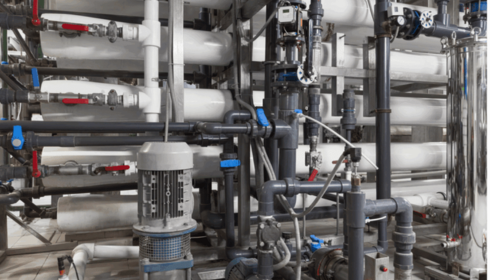
These systems are designed to handle larger volumes and more complex challenges—removing particles, reducing contaminants, and preparing water for specific uses.
The goal isn’t just cleaner water.
It’s better performance across the board.
Why One Size Doesn’t Fit All
Every business is different.
The way water is used in a restaurant isn’t the same as in a manufacturing plant. A hotel’s needs won’t match those of a healthcare facility.
That’s why generic solutions rarely work.
Instead, businesses benefit from tailored business water solutions that match their specific requirements.
This might involve combining different systems, adjusting treatment methods, or designing a setup that fits seamlessly into existing operations.
It’s not about complexity—it’s about fit.
The Cost of Ignoring the Details
Water issues don’t usually cause immediate, dramatic failures.
Related brief: When Clean Water Means More Than a Filter: Rethinking How Homes Treat Water Today
Instead, they create a slow build of problems.
Equipment wears down faster. Energy usage increases. Maintenance becomes more frequent. Processes lose efficiency.
Individually, these issues might seem minor.
But together, they can have a significant impact on your bottom line.
And often, they trace back to something as simple—and as overlooked—as water quality.
The Benefits You Don’t Always Notice
Improving water systems doesn’t always feel like a big change.
There’s no sudden transformation, no moment where everything feels completely different.
Instead, things just start working better.
Equipment runs more smoothly. Processes feel more consistent. Maintenance becomes less of a concern.
These are subtle improvements.
Related brief: When Your Heating System Feels Off: A Closer Look at What’s Really Happening Behind the Scenes
But in a business setting, subtle improvements can make a big difference over time.
Keeping It Practical
The goal isn’t to overcomplicate your water system.
It’s not about installing the most advanced technology available or chasing perfection.
It’s about finding the right balance.
A setup that supports your operations, improves efficiency, and fits into your workflow without creating extra work.
When done right, it becomes part of the background—just another system that works quietly and reliably.
The Comfort of Consistency
Consistency is at the heart of any successful business.
Customers expect it. Staff rely on it. Operations depend on it.
Water plays a bigger role in that consistency than most people realize.
When it’s right, everything else feels easier.
Related brief: When Electrical Problems Start Conversations: Why Good Communication Matters Before Any Wiring Begins
When it’s off, even slightly, it creates friction that’s hard to ignore.
When You Finally Connect the Dots
Once you address your water quality, the changes don’t always feel dramatic.
They feel steady.
Things run more smoothly. Costs stabilize. Unexpected issues become less frequent.
It’s not a flashy improvement.
But it’s a meaningful one.
Coming Back to What Water Should Do
At its core, water should support your business—not complicate it.
It should help your systems perform at their best, not hold them back. It should make daily operations easier, not more challenging.
And when you take the time to improve it—through proper treatment, effective filtration, and tailored solutions—that’s exactly what happens.
Not a dramatic overhaul.
Just a smoother, more reliable way of working.
Quiet, consistent, and exactly what your business needs to keep moving forward.