
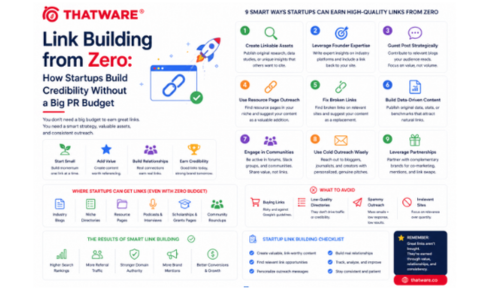
Starting a link building programme with zero domain authority, no existing relationships, and a limited budget is a specific kind of challenge that most link building advice doesn’t properly address. The majority of content about link acquisition is written for established businesses — brands that already have some authority, existing relationships with publications, and a track record to point to when approaching media contacts.
Startups start in a genuinely different position. No established domain. No existing coverage. No case studies. No client testimonials. Often no product that’s fully live yet. Getting that first wave of meaningful links in this environment requires a different approach than scale-up or enterprise link acquisition, and the tactics that work at maturity often don’t work at zero.
Here’s what actually works for startups starting from scratch.
Understanding What You Actually Have to Work With
Before any tactical conversation, it’s worth being honest about what a startup has that can attract links — because the starting point is not nothing, even if it feels that way.
Founder story and perspective. Journalists and publications are genuinely interested in the perspective of people doing something interesting, particularly in emerging sectors. If your founding story is compelling, if you have a strong point of view on your industry, or if you’re operating in a space that’s generating media interest, this is an asset that established companies often lack. A larger brand’s PR is managed and polished. A founder’s authentic perspective is more interesting.
Original data and research. If you have access to any form of original data — even preliminary, even small-scale — content built around that data attracts links in a way that opinion content doesn’t. A startup in fintech with access to transaction data. A startup in HR with survey data from early users. A startup in climate tech with environmental measurement data. Original numbers are genuinely valuable and get cited.
Related brief: A Complete Guide to Review Management and Reputation Monitoring in the Netherlands (2026)
Access and novelty. Being new means access to things established companies don’t have: first-hand accounts of starting something, direct access to founder networks, the perspective of an outsider looking at an industry with fresh eyes. These are legitimate editorial assets.
Speed of engagement. Startups can respond to media requests faster than large companies, where every quote needs legal and comms approval. Being genuinely responsive to journalist requests — through platforms like Qwoted or SourceBottle, or directly via journalist Twitter/X lists — produces placements that build both links and brand recognition.
The Tactics That Work at Zero Authority
HARO and journalist request platforms. Help a Reporter Out, Qwoted, SourceBottle, and journalist Twitter requests are systems where journalists announce what they’re looking for and sources respond. For startups, these represent an opportunity to earn links from publications that would never respond to cold outreach. The key is responding specifically and usefully — not with a pitch, but with a genuinely helpful answer to the specific thing the journalist asked for.
The conversion rate from HARO and similar platforms is lower than many people expect — expect to submit 20–30 responses per placed piece — but the links earned are genuinely high quality, from real publications, earned through genuine editorial judgement rather than paid placement.
Startup ecosystem content. There’s an entire category of media that covers the startup ecosystem specifically — startup news sites, venture capital blogs, accelerator content, founder communities. These properties are specifically interested in companies at early stage, make it relatively easy to get coverage, and provide links that are genuinely relevant to a startup’s early authority building.
Related brief: You may encounter quite a few obstacles when using WhatsApp Web, but in reality, they can all be easily resolved.
Getting featured in startup directories (Product Hunt, Crunchbase, F6S, EU-Startups, and dozens of vertical equivalents), participating in startup ecosystem publications, and engaging with accelerator and incubator content channels are activities that produce links with low barrier to entry and meaningful early authority contribution.
Guest contribution to industry publications. Writing substantive, genuinely useful content for publications in your industry — not guest posts on generic SEO blogs, but actual trade publications, industry associations, and practitioner platforms in your specific vertical — is one of the highest-quality link acquisition methods available.
The key is the quality of the contribution. Publications that accept genuine expert contributions — with real insights, real data, real usefulness — and reject marketing-dressed-as-content are the ones whose links are worth having. Pitching an article that’s a thinly veiled product pitch will get rejected. Pitching a substantive perspective on something the publication’s readers are genuinely wrestling with gets placed.
Broken link building. Identifying pages in your industry that link to resources that no longer exist, and reaching out to those page owners to suggest replacing the broken link with a link to your own equivalent resource, has a strong success rate precisely because you’re offering a genuine service rather than just asking for a link. Requires creating the replacement resource first, but the conversion rate on the outreach is meaningfully higher than cold link requests.
The Content Investment That Pays Off
For startups with very limited budgets, the highest-ROI link acquisition investment is usually creating one exceptional piece of content rather than many average ones.
Related brief: What Makes a Top VR Platform? Start with Compatibility
An original research piece, a comprehensive industry survey, a detailed guide that’s significantly better than what currently exists — this kind of content earns links passively over time, gets shared in communities, and gives journalists a genuine asset to reference. The investment required to produce it properly is significant, but the return is sustained in a way that content volume plays aren’t.
The type of content that earns links organically is content that’s genuinely useful to the people who would discover it. Not useful to your potential customers — useful to journalists, bloggers, researchers, and practitioners who might link to it. These are often different audiences, and the content needs to be designed for the linking audience rather than just the buying audience.
The best white hat link building programmes for startups typically combine: a foundational piece of linkable content (an original research asset, a comprehensive guide, a unique dataset or tool), consistent HARO and journalist engagement, selective guest contribution to relevant publications, and startup ecosystem visibility through appropriate directories and communities.
What Not to Spend Time On
There are link acquisition activities that consume significant time and produce very little for startups specifically.
Generic link outreach. Cold emails to webmasters asking for links with no specific reason why they’d want to link to you produce negligible results and consume hours that could be better spent. Without an established brand or a compelling specific reason for the link, the response rate is too low to justify the investment.
Related brief: Venue Details That Create a Relaxed Experience for Couples and Guests
Paid guest posts on link farms. Sites that charge for guest post placement and primarily exist to sell links are producing links that carry significant algorithmic risk. Google’s spam detection has become sophisticated enough to identify link farm patterns, and links from these properties are either devalued or actively penalising. This is particularly true for startups, whose early link profiles are carefully scrutinised by algorithms.
Directory submissions at scale. Submitting to hundreds of generic web directories was a tactics that worked in 2005. It produces nothing of value now and the time is better spent on activities that produce genuine editorial links.
The Relationship Investment That Compounds
Here’s something that genuinely distinguishes founders and marketing leads who build great link profiles for their startups from those who don’t: the investment in genuine relationships with journalists and content creators in their sector.
Not transactional relationships — not “I gave you a quote and now you should link to me” but genuine engagement with the journalists and creators who cover your space. Reading their work. Responding substantively to their Twitter/X posts. Being genuinely helpful when they’re researching something you know about. Introducing them to other useful sources.
This investment doesn’t produce links immediately. It produces a relationship where, when you have something genuinely newsworthy to share — a funding round, a significant partnership, a compelling data point, a genuinely interesting perspective on something in the news — you have a warm relationship to reach out through rather than a cold inbox to hope for.
Related brief: Navigating the Deal: Why the Right M&A Advisor Makes All the Difference
The link building services that work best for startups over a 12–18 month horizon are the ones that combine tactical activity (HARO, guest contribution, broken link building) with this relationship investment, because the combination produces a compounding effect. The tactical activities produce early links. The relationship investment produces the higher-value media coverage that builds real authority over time.
Realistic Expectations and the Long Game
Starting from zero domain authority, a startup with a well-executed link building programme — combining the activities described above, consistently executed over twelve to eighteen months — can realistically build a domain profile in the DR 30–50 range (using Ahrefs’ metric as a rough proxy) from a handful of genuinely high-quality links.
That’s enough to rank competitively for long-tail keyword opportunities, establish meaningful topical authority in a specific niche, and create the foundation for more ambitious link acquisition as the brand becomes more established.
It won’t happen in ninety days. It won’t produce first-page rankings for competitive head terms in the first year. But the compounding effect of consistently earning genuine links from genuinely relevant sources builds something durable — an authority profile that keeps working long after the activities that built it have completed.
That’s the startup link building argument in a sentence: do the hard, slow, right things now so that the compounding effect is working for you two years from now when you have more resources to invest and the authority base to make them count.