

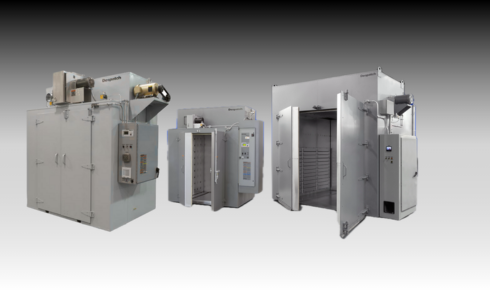

Temperature defines how powder coating transforms from loose particles into a durable finish. Different curing ranges affect oven construction, airflow behavior, and overall system design. Engineers evaluating powder coating ovens often compare mid-temperature and high-temperature curing systems because each range supports different materials, production speeds, and coating formulations used in modern powder coating operations.
Operating Range 250 to 350°F vs 350 to 500°F
Mid-temperature powder curing ovens typically operate between 250 and 350 degrees Fahrenheit. These ovens are often used for coatings designed to cure at lower temperatures, especially when the goal is to protect thin metal parts or reduce energy consumption. Many powder coating systems serving light manufacturing rely on this range because it allows faster warm-up times while maintaining stable curing conditions.
Higher temperature ovens extend the operating range up to about 500 degrees Fahrenheit. Facilities running heavier components often rely on this level of heat to fully cure thicker coatings or specialized powder formulas. Industrial powder coating oven designs in this category require stronger heating systems and more robust internal construction because the equipment must sustain higher temperatures during long production shifts.
Insulation Thickness Requirements Mid-temp vs High-temp
Insulation design changes significantly between mid-temperature and high-temperature powder coating ovens. Lower temperature ovens require less insulation thickness because heat loss through the oven walls remains moderate. Even so, proper insulation still plays a role in keeping energy use controlled and preventing temperature swings during the curing cycle.
High-temperature powder curing ovens demand thicker insulation layers to keep the heat contained inside the chamber. Greater thermal protection prevents exterior heat loss while protecting surrounding work areas. Engineers building a powder coating equipment package for high-temperature applications often specify higher-density insulation materials to maintain consistent internal conditions throughout the curing process.
Burner Capacity Sizing Mid-temp vs High-temp
Burner capacity directly affects how quickly powder coating ovens reach target curing temperatures. Mid-temperature ovens require smaller burner systems because the heating demand remains moderate. These burners still circulate heated air effectively, allowing powder coating to cure evenly without excessive fuel consumption.
High-temperature systems require stronger burners capable of delivering greater thermal output. The additional heating capacity supports ovens designed for thicker coatings or heavy metal parts. Designers evaluating powder coating equipment for sale often calculate burner size carefully so the oven reaches curing temperature quickly without exceeding safe operating limits.
Airflow Velocity Targets Lower vs Higher Heat Loads
Air movement plays a major role in heat transfer inside powder coating equipment. Mid-temperature powder coating systems typically operate with moderate airflow velocities because the heat load is lower. Recirculating air spreads thermal energy evenly across coated surfaces, helping maintain stable curing conditions.
Higher temperature ovens demand stronger airflow to move larger volumes of heated air through the chamber. Engineers design airflow systems differently depending on the expected heat load. Common airflow adjustments in high-temperature powder coating ovens include:
- Higher fan capacity to circulate heated air efficiently
- Reinforced ducting to withstand increased temperature levels
- Improved recirculation design to prevent heat buildup
These adjustments allow powder coating equipment to maintain consistent curing temperatures even when operating near the upper range of the oven’s thermal capacity.
Cure Cycle Duration Short Dwell vs Extended Dwell
Cure cycle duration depends heavily on oven temperature and part design. Mid-temperature powder curing ovens often use shorter dwell times when coating lightweight components. Thin metal parts absorb heat quickly, allowing powder coating to flow and cure without extended exposure to high heat.
Thicker materials or complex assemblies may require longer dwell times, especially in higher temperature ovens. Extended dwell cycles ensure that internal metal surfaces reach curing temperature as well. Facilities comparing a powder coating oven for sale often evaluate dwell time requirements carefully because they affect production speed and throughput.
Control Tolerance Bands Standard vs Tighter Limits
Temperature control accuracy becomes more demanding as oven temperatures increase. Mid-temperature powder coating systems generally operate within standard tolerance bands because the curing range remains relatively forgiving for most powder formulas.
High-temperature powder coating ovens must maintain tighter control limits. Even small temperature variations can affect coating performance or cause uneven curing across large parts. Advanced control systems monitor heating elements, airflow patterns, and recirculation fans to keep curing temperatures within the required tolerance range.
Exhaust Volume Demands Moderate vs Elevated Output
Oven exhaust systems remove excess heat and airborne contaminants during curing. Mid-temperature powder curing ovens usually require moderate exhaust volumes because the internal temperature difference between the chamber and the surrounding environment remains manageable.
Higher temperature ovens generate greater thermal output, which increases the need for stronger exhaust airflow. Designers account for this demand when planning powder coating systems used in high-temperature applications. Adequate exhaust capacity helps maintain stable internal temperatures while protecting nearby equipment from excessive heat buildup.
Energy Consumption Profile Reduced vs Increased
Energy consumption varies noticeably between mid-temperature and high-temperature powder coating ovens. Lower curing temperatures reduce fuel demand because the heating system does not need to produce extreme levels of thermal energy.
Higher temperature ovens consume more energy due to larger burners, stronger airflow systems, and extended dwell times. Facilities reviewing powder coating equipment packages often compare energy profiles before selecting an oven configuration that balances production efficiency with operating costs.
Application Focus Light Gauge vs Heavy Steel Parts
Application requirements ultimately determine whether mid-temperature or high-temperature ovens are used. Mid-temperature powder coating equipment often handles light gauge metal products such as appliance parts, aluminum components, and thin steel panels.
Heavy structural parts or thick fabricated assemblies frequently require the higher heat range provided by high-temperature powder coating ovens. These systems support coatings that demand stronger curing conditions to reach full durability. Complete powder coating systems frequently include industrial powder coating ovens tailored to specific temperature requirements, airflow patterns, and production volumes. Solutions provided by Reliant Finishing Systems help manufacturers build powder coating operations that maintain reliable curing performance across both mid-temperature and high-temperature applications.