Author: 7le3vl

  • Technical Differences Between Mid-Temp and High-Temp Powder Curing Ovens

    Technical Differences Between Mid-Temp and High-Temp Powder Curing Ovens

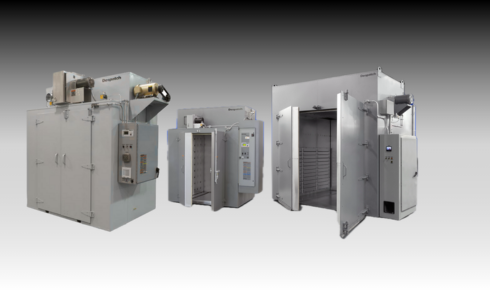
    Temperature defines how powder coating transforms from loose particles into a durable finish. Different curing ranges affect oven construction, airflow behavior, and overall system design. Engineers evaluating powder coating ovens often compare mid-temperature and high-temperature curing systems because each range supports different materials, production speeds, and coating formulations used in modern powder coating operations.

    Operating Range 250 to 350°F vs 350 to 500°F

    Mid-temperature powder curing ovens typically operate between 250 and 350 degrees Fahrenheit. These ovens are often used for coatings designed to cure at lower temperatures, especially when the goal is to protect thin metal parts or reduce energy consumption. Many powder coating systems serving light manufacturing rely on this range because it allows faster warm-up times while maintaining stable curing conditions.

    Higher temperature ovens extend the operating range up to about 500 degrees Fahrenheit. Facilities running heavier components often rely on this level of heat to fully cure thicker coatings or specialized powder formulas. Industrial powder coating oven designs in this category require stronger heating systems and more robust internal construction because the equipment must sustain higher temperatures during long production shifts.

    Insulation Thickness Requirements Mid-temp vs High-temp

    Insulation design changes significantly between mid-temperature and high-temperature powder coating ovens. Lower temperature ovens require less insulation thickness because heat loss through the oven walls remains moderate. Even so, proper insulation still plays a role in keeping energy use controlled and preventing temperature swings during the curing cycle.

    High-temperature powder curing ovens demand thicker insulation layers to keep the heat contained inside the chamber. Greater thermal protection prevents exterior heat loss while protecting surrounding work areas. Engineers building a powder coating equipment package for high-temperature applications often specify higher-density insulation materials to maintain consistent internal conditions throughout the curing process.

    Burner Capacity Sizing Mid-temp vs High-temp

    Burner capacity directly affects how quickly powder coating ovens reach target curing temperatures. Mid-temperature ovens require smaller burner systems because the heating demand remains moderate. These burners still circulate heated air effectively, allowing powder coating to cure evenly without excessive fuel consumption.

    High-temperature systems require stronger burners capable of delivering greater thermal output. The additional heating capacity supports ovens designed for thicker coatings or heavy metal parts. Designers evaluating powder coating equipment for sale often calculate burner size carefully so the oven reaches curing temperature quickly without exceeding safe operating limits.

    Airflow Velocity Targets Lower vs Higher Heat Loads

    Air movement plays a major role in heat transfer inside powder coating equipment. Mid-temperature powder coating systems typically operate with moderate airflow velocities because the heat load is lower. Recirculating air spreads thermal energy evenly across coated surfaces, helping maintain stable curing conditions.

    Higher temperature ovens demand stronger airflow to move larger volumes of heated air through the chamber. Engineers design airflow systems differently depending on the expected heat load. Common airflow adjustments in high-temperature powder coating ovens include:

    • Higher fan capacity to circulate heated air efficiently
    • Reinforced ducting to withstand increased temperature levels
    • Improved recirculation design to prevent heat buildup

    These adjustments allow powder coating equipment to maintain consistent curing temperatures even when operating near the upper range of the oven’s thermal capacity.

    Cure Cycle Duration Short Dwell vs Extended Dwell

    Cure cycle duration depends heavily on oven temperature and part design. Mid-temperature powder curing ovens often use shorter dwell times when coating lightweight components. Thin metal parts absorb heat quickly, allowing powder coating to flow and cure without extended exposure to high heat.

    Thicker materials or complex assemblies may require longer dwell times, especially in higher temperature ovens. Extended dwell cycles ensure that internal metal surfaces reach curing temperature as well. Facilities comparing a powder coating oven for sale often evaluate dwell time requirements carefully because they affect production speed and throughput.

    Control Tolerance Bands Standard vs Tighter Limits

    Temperature control accuracy becomes more demanding as oven temperatures increase. Mid-temperature powder coating systems generally operate within standard tolerance bands because the curing range remains relatively forgiving for most powder formulas.

    High-temperature powder coating ovens must maintain tighter control limits. Even small temperature variations can affect coating performance or cause uneven curing across large parts. Advanced control systems monitor heating elements, airflow patterns, and recirculation fans to keep curing temperatures within the required tolerance range.

    Exhaust Volume Demands Moderate vs Elevated Output

    Oven exhaust systems remove excess heat and airborne contaminants during curing. Mid-temperature powder curing ovens usually require moderate exhaust volumes because the internal temperature difference between the chamber and the surrounding environment remains manageable.

    Higher temperature ovens generate greater thermal output, which increases the need for stronger exhaust airflow. Designers account for this demand when planning powder coating systems used in high-temperature applications. Adequate exhaust capacity helps maintain stable internal temperatures while protecting nearby equipment from excessive heat buildup.

    Energy Consumption Profile Reduced vs Increased

    Energy consumption varies noticeably between mid-temperature and high-temperature powder coating ovens. Lower curing temperatures reduce fuel demand because the heating system does not need to produce extreme levels of thermal energy.

    Higher temperature ovens consume more energy due to larger burners, stronger airflow systems, and extended dwell times. Facilities reviewing powder coating equipment packages often compare energy profiles before selecting an oven configuration that balances production efficiency with operating costs.

    Application Focus Light Gauge vs Heavy Steel Parts

    Application requirements ultimately determine whether mid-temperature or high-temperature ovens are used. Mid-temperature powder coating equipment often handles light gauge metal products such as appliance parts, aluminum components, and thin steel panels.

    Heavy structural parts or thick fabricated assemblies frequently require the higher heat range provided by high-temperature powder coating ovens. These systems support coatings that demand stronger curing conditions to reach full durability. Complete powder coating systems frequently include industrial powder coating ovens tailored to specific temperature requirements, airflow patterns, and production volumes. Solutions provided by Reliant Finishing Systems help manufacturers build powder coating operations that maintain reliable curing performance across both mid-temperature and high-temperature applications.


  • Reliable Travel Options in Kolkata: Comfort, Convenience, and Smart Choices

    Tempo Traveller Kolkata
    Tempo Traveller Kolkata

    Kolkata has a rhythm of its own. The city blends old-world charm with modern hustle, and getting around efficiently can make a huge difference in how you experience it. Whether you’re a tourist exploring iconic landmarks or a local planning a group trip, choosing the right travel option matters more than people often realize.

    Why Choosing the Right Transport Matters

    Anyone who has spent time navigating Kolkata’s busy streets knows how unpredictable traffic can be. Public transport is widely available, but it doesn’t always offer the comfort or flexibility you might need—especially if you’re traveling with family, luggage, or on a tight schedule.

    This is where services like Car rental Kolkata  come into the picture. Renting a car gives you the freedom to move at your own pace. No waiting, no overcrowded buses, and no last-minute hassles. It’s especially helpful if you’re visiting places like Victoria Memorial, Howrah Bridge, or even heading out for a day trip to nearby destinations.

    Another advantage is privacy. You get your own space, which can make a big difference during longer journeys. Plus, with professional drivers available, you don’t have to worry about navigating unfamiliar routes.

    Ideal for Group Travel and Family Trips

    Traveling in a group? That’s a whole different challenge. Coordinating multiple vehicles or relying on public transport can quickly become stressful. This is where larger vehicle options become a practical solution.

    A Tempo Traveller Kolkata service is often the go-to choice for families, corporate teams, or groups of friends. These vehicles are designed to accommodate multiple passengers comfortably, making them perfect for outings, weddings, or weekend getaways.

    The best part? Everyone stays together. No one gets left behind, and the journey becomes part of the fun. You can chat, relax, and enjoy the ride without worrying about logistics.

    Comfort Meets Convenience

    Modern travel isn’t just about reaching your destination—it’s about how you get there. Today’s rental vehicles come equipped with features that make journeys smoother and more enjoyable. Think air conditioning, spacious seating, and ample luggage space.

    When you opt for a Tempo Traveller in Kolkata, you’re not just booking a ride—you’re choosing comfort. These vehicles are particularly useful for longer routes or when traveling with elderly passengers or kids who need a bit more space to stay comfortable.

    Many service providers also offer customizable packages. Whether you need a vehicle for a few hours, a full day, or even multiple days, you can tailor the service to match your schedule.

    Flexible Options for Every Need

    One of the biggest advantages of rental services in Kolkata is flexibility. You can choose from a wide range of vehicles depending on your requirements—compact cars for solo travel, sedans for small families, and larger vans for groups.

    Some people prefer self-drive options, while others opt for chauffeur-driven services. Both have their benefits. Self-drive gives you full control, while a driver allows you to sit back and relax, especially in a city known for its traffic.

    For business travelers, these services can also add a touch of professionalism. Arriving on time, without the stress of navigating traffic, can set the tone for meetings or events.

    Making the Most of Your Kolkata Journey

    Kolkata is not just a destination; it’s an experience. From its rich cultural heritage to its vibrant street life, there’s so much to explore. Having reliable transport ensures you don’t miss out on any of it.

    Imagine starting your day with a peaceful drive along the Hooghly River, visiting historical landmarks, and ending with some authentic Bengali cuisine—all without worrying about how to get from one place to another.

    That’s the real value of choosing the right travel option. It gives you the freedom to focus on what truly matters—enjoying the journey.

    Final Thoughts

    At the end of the day, travel should be simple, comfortable, and enjoyable. Whether you’re planning a solo trip, a family outing, or a group adventure, having the right vehicle can make all the difference.

    Kolkata offers plenty of options, but taking a little time to choose wisely can transform your entire experience. So next time you’re planning a trip, think beyond just reaching your destination—think about how you want to get there.

  • When Your Heating System Feels Off: A Closer Look at What’s Really Happening Behind the Scenes

    When Your Heating System Feels Off: A Closer Look at What’s Really Happening Behind the Scenes

    There’s a subtle shift you notice when your heating system isn’t quite doing its job. Not a full breakdown — just something slightly off. The air feels weaker, the warmth doesn’t last as long, or maybe certain rooms don’t feel as comfortable anymore.

    It’s easy to ignore at first. Life gets busy, and as long as the system is still running, it doesn’t feel urgent. But those small changes usually mean something deeper is going on — something worth paying attention to before it grows into a bigger issue.

    The Quiet Clues Your Heater Leaves Behind

    Heating systems rarely fail without warning. They tend to leave little clues — the kind you might overlook if you’re not paying attention.

    A slight delay when the system starts. Air that feels inconsistent. Maybe a faint smell or an unfamiliar sound. None of these feel like emergencies, but together, they tell a story.

    That’s where proper heater diagnostics come in. It’s not just about identifying what’s broken — it’s about understanding how the system is behaving as a whole. Good diagnostics look at airflow, electrical components, temperature output, and overall system response.

    I once heard someone describe it as “listening to the system instead of just looking at it,” which honestly makes sense. Because sometimes, the issue isn’t obvious until you start connecting the dots.

    Why Guesswork Doesn’t Really Work

    When something goes wrong with a heating system, it’s tempting to jump to conclusions. Maybe it’s the thermostat. Maybe the unit is just old. Maybe it’s time for a replacement.

    But guessing can lead you down the wrong path.

    Without proper evaluation, you might end up fixing the wrong thing — or replacing something that didn’t need replacing at all. That’s where structured performance testing becomes valuable.

    Instead of relying on assumptions, testing provides actual data. It shows how efficiently the system is running, whether it’s producing enough heat, and how well it’s distributing that heat throughout your home.

    It’s a bit like getting a health check-up. You don’t just go by how you feel — you look at the numbers, the patterns, the underlying indicators.

    And once you have that information, decisions become much clearer.

    The Difference Experience Makes

    Not all heating issues are straightforward. Some are layered, involving multiple factors that interact in ways that aren’t immediately obvious.

    That’s why working with experienced HVAC repair professionals can make such a difference. It’s not just about technical skill — it’s about perspective. The ability to recognize patterns, to anticipate issues, to see what others might miss.

    I’ve seen cases where a system was repaired multiple times without resolving the root problem. It took someone with a fresh perspective to step in, reassess everything, and identify the actual cause.

    And once that was addressed, everything else fell into place.

    Experience doesn’t just speed up the process — it improves the outcome.

    Why Systems Lose Efficiency Over Time

    Heating systems don’t stay the same forever. Even with regular use, components wear down, airflow patterns shift, and efficiency gradually declines.

    It’s not always noticeable right away. The system still works, just not as well as it used to.

    You might find yourself adjusting the thermostat more often, or noticing that it takes longer to reach the desired temperature. These are subtle signs, but they’re worth paying attention to.

    Because when efficiency drops, the system has to work harder. And when it works harder, it’s more likely to develop further issues.

    Addressing these changes early can help maintain performance and extend the life of the system.

    The Overlooked Role of Airflow

    Airflow plays a bigger role in heating than most people realize. It’s not just about generating warm air — it’s about moving that air effectively throughout the space.

    Blocked vents, leaky ducts, or even furniture placement can disrupt airflow in ways that aren’t immediately obvious. And when airflow is uneven, comfort becomes inconsistent.

    One room feels warm, another doesn’t. You adjust settings, but the imbalance remains.

    Improving airflow doesn’t always require major changes. Sometimes, it’s about small adjustments — clearing obstructions, sealing ducts, or repositioning vents.

    These changes might seem minor, but they can have a noticeable impact on overall comfort.

    Maintenance: The Quiet Foundation of Reliability

    If there’s one thing that keeps heating systems running smoothly, it’s regular maintenance. Not complicated, not time-consuming — just consistent.

    Cleaning filters, checking components, ensuring everything is functioning as it should. These small actions help prevent larger problems from developing.

    And yet, maintenance is often the first thing to be skipped.

    It’s understandable. If the system is working, it doesn’t feel necessary. But over time, neglect can lead to reduced performance and unexpected breakdowns.

    A little attention now can save a lot of trouble later.

    Knowing When to Act

    There’s a balance between being cautious and being proactive. Not every small issue requires immediate action, but ignoring patterns isn’t helpful either.

    If you notice consistent changes in performance, unusual behavior, or anything that feels out of the ordinary, it’s worth taking a closer look.

    Sometimes, that means doing a few basic checks yourself. Other times, it means calling in someone who can evaluate the system more thoroughly.

    The key is not waiting until the problem becomes unavoidable.

    Bringing It All Together

    Heating systems are easy to overlook when they’re working well. They quietly do their job, keeping your home comfortable without drawing attention.

    But when something shifts — even slightly — it’s worth paying attention.

    Because comfort isn’t just about warmth. It’s about consistency, reliability, and the feeling that your home is working the way it should.

    And with the right approach — a bit of awareness, timely diagnostics, and the right support — most heating issues can be managed before they become major problems.

    In the end, it’s not about perfection. It’s about creating a space that feels steady, comfortable, and easy to live in.

    And that’s something worth maintaining.

  • Ultimate Guide 2026: Smart Strategies to Maximize Your Winning Potential

    Ultimate Guide 2026: Smart Strategies to Maximize Your Winning Potential

    In today’s rapidly evolving digital gaming landscape, achieving consistent and meaningful results requires more than luck. Players in 2026 are facing increasingly sophisticated systems, dynamic game mechanics, and highly engaging environments designed to keep them active for longer periods. In this context, success is no longer about chasing wins blindly—it is about applying structured strategies, disciplined thinking, and a clear understanding of how modern slot gacor platforms operate.

    This guide outlines practical and realistic strategies that can help players improve their performance while maintaining control and sustainability.

    Understanding the Nature of Modern Games

    Before applying any strategy, it is essential to understand how modern games function. Most digital games today are powered by advanced algorithms that ensure outcomes remain unpredictable and fair over time.

    This means:

    Results are independent from previous outcomes No strategy can guarantee consistent wins Long-term performance depends on decision-making rather than prediction

    Recognizing these fundamentals helps players avoid unrealistic expectations and focus on what they can control.

    1. Set a Structured Budget from the Start

    One of the most important strategies is financial discipline. Without a clear budget, even the best strategies can fail.

    Key principles:

    Allocate a fixed amount specifically for gaming Divide your budget into smaller sessions Never use funds intended for essential needs

    By setting clear limits, players reduce risk and create a controlled environment where decisions are based on strategy rather than impulse.

    2. Choose the Right Game Type

    Not all games are designed the same. Each type offers different levels of risk, reward, and gameplay experience.

    When selecting a game, consider:

    Volatility (low vs high risk) Payout frequency Complexity of features

    Choosing a game that aligns with your personal style and budget significantly improves your overall experience.

    3. Understand RTP and Volatility

    Two key factors that influence outcomes are Return to Player (RTP) and volatility.

    RTP represents the expected percentage of returns over time Volatility determines how often and how much a game pays out

    For example:

    High RTP + low volatility = steady, smaller wins High volatility = less frequent but potentially larger payouts

    Balancing these elements allows players to tailor their strategy based on their goals.

    4. Manage Your Session Time Effectively

    Time management is often overlooked but plays a crucial role in maintaining focus and discipline.

    Best practices:

    Set a fixed duration for each session Take regular breaks to reset your mindset Avoid extended play when feeling fatigued

    Short, focused sessions are generally more effective than long, unfocused ones.

    5. Avoid Chasing Losses

    One of the most common mistakes is attempting to recover losses immediately. This behavior often leads to increased risk and poor decision-making.

    Instead:

    Accept losses as part of the process Stick to your original budget and plan Pause when experiencing a losing streak

    Maintaining emotional control is essential for long-term success.

    6. Adjust Bet Sizes Strategically

    Bet sizing is a powerful tool when used correctly. Rather than betting randomly, players should adjust their bets based on their current situation.

    Suggested approach:

    Start with smaller bets to extend playtime Increase bets gradually during favorable sessions Reduce bets during losing streaks

    This method helps preserve balance while maximizing opportunities when conditions feel right.

    7. Focus on Consistency Over Big Wins

    Many players aim for large, instant rewards, but this approach often leads to instability. A more effective strategy is to focus on consistent, smaller gains.

    Why consistency matters:

    Reduces risk of significant losses Builds confidence and control Supports long-term sustainability

    Success in 2026 is less about single big wins and more about maintaining steady progress.

    8. Use Data and Observation

    Modern platforms provide access to valuable data, such as game history and performance trends. While outcomes remain random, analyzing your own behavior can reveal useful insights.

    Track:

    Session duration Bet patterns Wins and losses over time

    This information helps identify strengths, weaknesses, and areas for improvement.

    9. Stay Emotionally Neutral

    Emotions can significantly impact decision-making. Excitement after a win or frustration after a loss can lead to impulsive actions.

    To maintain control:

    Treat each session as independent Avoid making decisions based on recent outcomes Stay focused on your strategy

    A calm mindset leads to more rational and effective decisions.

    10. Know When to Stop

    Perhaps the most important strategy is knowing when to walk away. Setting clear exit points helps protect both your time and resources.

    Set limits for:

    Maximum loss per session Target profit level Total playtime

    Stopping at the right moment ensures that gains are preserved and losses are controlled.

    The Role of Discipline in 2026

    With advanced technology and immersive environments, maintaining discipline has become more challenging—and more important—than ever.

    Successful players:

    Follow structured plans Avoid impulsive behavior Adapt to changing conditions

    Discipline transforms strategy from theory into practical results.

    Common Mistakes to Avoid

    Even with a solid plan, certain mistakes can undermine your efforts:

    Playing without a clear strategy Ignoring budget limits Switching games too frequently Relying on myths or “guaranteed” systems

    Avoiding these pitfalls is just as important as applying the right strategies.

    Building a Sustainable Approach

    The most effective approach to gaming is one that prioritizes sustainability. This means balancing enjoyment with responsibility and maintaining control over your actions.

    A sustainable strategy includes:

    Clear goals and limits Consistent decision-making Regular self-evaluation

    This mindset ensures that gaming remains a positive and controlled activity.

    Conclusion

    Maximizing your winning potential in 2026 is not about finding a secret formula—it is about applying smart, practical strategies with discipline and awareness. By understanding how modern systems work, managing your budget, controlling emotions, and maintaining consistency, you can significantly improve your overall experience.

    While outcomes will always involve an element of chance, the way you approach each session makes a meaningful difference. The most successful players are not those who rely on luck, but those who combine knowledge, strategy, and self-control.

    In the end, true success lies not only in the results you achieve, but in the consistency and confidence with which you play.

  • What Really Happens Inside Your Water Filter (And Why It Matters More Than You Think)

    What Really Happens Inside Your Water Filter (And Why It Matters More Than You Think)

    There’s something oddly satisfying about pouring a glass of water and not thinking twice about it. No hesitation, no second-guessing. Just… drink.

    But if you’ve ever paused—maybe because the taste felt a little off, or the smell lingered longer than it should—you’ve probably wondered what’s actually going on behind the scenes. Not just in your pipes, but in the systems designed to clean your water.

    And that’s where things get interesting.

    Because modern filtration isn’t just about removing “bad stuff.” It’s a mix of science, design, and a quiet kind of precision that most of us never really see.

    The Shift From Basic Filters to Something Smarter

    A few years ago, most home filters were pretty straightforward. They handled the obvious things—sediment, some chlorine, maybe a bit of odor. It was enough for many households.

    But as awareness grew, so did expectations. People started asking more questions. What about dissolved salts? Heavy metals? Those invisible contaminants you can’t taste or smell?

    That’s when advanced RO technology started becoming more common in homes. It wasn’t just for industrial setups anymore. Suddenly, this once “technical” system became something everyday households could rely on.

    And the difference it makes isn’t loud or dramatic—it’s subtle. Water that tastes cleaner. Feels lighter. Almost like it’s supposed to.

    Breaking Down the Science Without Getting Too Technical

    Let’s be honest—most of us don’t want a deep chemistry lesson when we’re just trying to understand our water.

    But there’s one part of reverse osmosis that’s worth knowing about, because it explains almost everything: the membrane.

    If you’ve ever come across semipermeable membrane info, you’ve probably seen it described as a barrier that lets certain molecules pass while blocking others. Sounds simple enough, right?

    In practice, it’s incredibly precise.

    Water is pushed through this membrane under pressure. The tiny pores allow water molecules to pass, but block a wide range of impurities—things like dissolved salts, bacteria, and even some heavy metals.

    What comes out the other side is cleaner, more refined water.

    And the best part? You don’t have to think about it once it’s working. It just happens, quietly, every time you turn on the tap.

    Why Purification Isn’t Just About Drinking

    When people hear the term water purification, they often think only about drinking water. And yes, that’s a big part of it.

    But the impact goes beyond just what’s in your glass.

    Purified water affects how your food tastes, how your beverages turn out, even how comfortable your daily routine feels. Coffee becomes smoother. Rice cooks more evenly. There’s a consistency that’s hard to explain until you experience it.

    It’s not about perfection—it’s about removing the little inconsistencies that add up over time.

    The Everyday Experience You Didn’t Expect

    One of the most surprising things about upgrading your water system is how quickly it blends into your life.

    At first, you notice the taste. It’s cleaner, maybe even a bit different than what you’re used to. But after a while, that becomes your new normal.

    And then you notice other things.

    You drink more water without forcing yourself. You stop buying bottled water as often. Even guests might casually mention, “This water tastes good,” without knowing why.

    It’s not a dramatic transformation. It’s a quiet improvement that shows up in small, consistent ways.

    Why Not All Systems Feel the Same

    Here’s something worth mentioning—not all filtration systems deliver the same experience.

    Some focus on basic filtration, removing larger particles and improving taste slightly. Others, like RO systems, go deeper, targeting dissolved impurities that simpler filters can’t handle.

    That doesn’t mean one is always better than the other. It depends on what you need.

    If your main concern is taste and odor, a basic system might be enough. But if you’re dealing with more complex water quality issues, something more advanced becomes necessary.

    It’s less about choosing the “best” system and more about choosing the right one for your situation.

    The Part Most People Overlook

    No matter how advanced your system is, there’s one thing that determines how well it performs over time: maintenance.

    Filters don’t last forever. Membranes need occasional replacement. And if you ignore those things, even the best system can start to lose effectiveness.

    The good news? It’s usually simple. Regular check-ups, timely replacements, and a bit of attention go a long way.

    It’s not something you need to obsess over—but it’s not something you should forget either.

    Why We Don’t Think About Water Until We Do

    Water is one of those things that fades into the background when it’s working properly. You don’t analyze it, question it, or even notice it.

    But when something feels off, even slightly, it pulls your attention back.

    That’s usually the moment people start exploring filtration—not out of fear, but out of a desire for consistency.

    Because once you realize your water can be better, it’s hard to settle for “just okay.”

    Starting Without Getting Lost in the Details

    If all of this feels a bit overwhelming, take a step back.

    You don’t need to understand every technical detail or compare every system on the market. Start with your experience. How does your water taste? Smell? Feel?

    If something seems off, look into it. Get your water tested if needed. Learn just enough to make an informed decision.

    From there, the right solution tends to reveal itself.

    A Quiet Upgrade That Changes More Than You Expect

    At the end of the day, improving your water isn’t about technology—it’s about how it fits into your life.

    It’s about turning on the tap and not thinking twice. About drinking a glass of water without hesitation. About small, everyday moments that feel just a little better.

    And maybe that’s the real value—not in the system itself, but in the simplicity it brings back.

    Because when your water is right, everything else feels just a bit easier.

  • The Growing Role of Decision Support Tools in Crypto Trading

    The Growing Role of Decision Support Tools in Crypto Trading

    Cryptocurrency markets are known for their speed, volatility, and unpredictability. For many traders, the challenge is no longer just accessing information—it is making sense of it in a way that leads to better decisions. As a result, there has been a noticeable shift toward decision support tools that help traders interpret complex data rather than simply display it.

    This shift reflects a broader change in how market participants approach trading: from reactive behavior to structured decision-making.

    From Information Access to Decision Support

    In the past, having access to price charts and basic indicators was considered sufficient. Today, that is no longer the case. Traders are now dealing with a combination of:

    • Cross-exchange price movements
    • Derivatives metrics like funding rates and open interest
    • On-chain activity and wallet behavior
    • Market sentiment and news flow

    Simply viewing this information is not enough. Traders need tools that help them connect these data points and extract meaning from them.

    This is why many are searching for “crypto decision support platforms with real-time data analysis” or “tools that help interpret crypto market signals effectively.”

    AiCoin is part of this evolution, focusing on combining data sources in a way that supports informed decision-making rather than just presenting raw numbers.

    The Concept of Actionable Insights

    One of the key ideas behind decision support tools is actionable insight. This refers to information that is not only accurate but also immediately useful for making a decision.

    For example:

    • A price alert becomes actionable when it is tied to a key support or resistance level
    • A funding rate becomes meaningful when compared across exchanges
    • A spike in volume becomes relevant when aligned with a trend

    Without context, these data points remain isolated. With proper interpretation, they become signals that can guide trading actions.

    This explains the increasing interest in “how to turn crypto market data into actionable trading insights.”

    The Role of AI and Pattern Recognition

    Artificial intelligence is beginning to play a larger role in crypto analysis. While still evolving, AI-driven tools can assist in identifying patterns that may not be immediately obvious to human traders.

    These systems can:

    • Detect recurring price behaviors
    • Highlight unusual market activity
    • Suggest potential scenarios based on historical data

    However, AI is not a replacement for human judgment. Instead, it acts as a support layer, helping traders process information more efficiently.

    Searches like “AI tools for crypto market analysis and trading decisions” indicate growing curiosity about how these technologies can enhance trading workflows.

    Reducing Emotional Bias Through Structured Inputs

    One of the biggest challenges in trading is managing emotions. Fear, greed, and impatience can all influence decisions, often leading to inconsistent results.

    Decision support tools help reduce this bias by providing structured inputs. When traders rely on predefined signals and data-driven insights, they are less likely to act impulsively.

    For instance:

    • Waiting for confirmation from multiple indicators before entering a trade
    • Using alerts to avoid reacting to every price fluctuation
    • Relying on data comparisons rather than assumptions

    This structured approach promotes discipline and consistency over time.

    The Importance of Multi-Layered Analysis

    Effective decision-making in crypto trading often requires analyzing multiple layers of the market simultaneously. These layers include:

    • Price trends and technical indicators
    • Market liquidity and volume
    • Derivatives positioning and leverage
    • On-chain activity and asset flows

    When these layers align, they provide stronger signals. When they conflict, they may indicate uncertainty or potential reversals.

    Traders increasingly look for “multi-layer crypto analysis tools combining technical and on-chain data” to support this type of comprehensive evaluation.

    Customization and Personal Trading Styles

    No two traders approach the market in exactly the same way. Some focus on short-term volatility, while others prioritize long-term trends. Decision support tools must therefore be flexible enough to accommodate different styles.

    Customization plays a key role here. Traders benefit from being able to:

    • Adjust chart settings and indicators
    • Select which data points to prioritize
    • Configure alerts based on personal strategies

    This adaptability ensures that tools enhance individual workflows rather than impose a one-size-fits-all approach.

    The Shift Toward Continuous Learning

    Another important aspect of decision support tools is their role in learning. By presenting data in a structured and interpretable way, these platforms help traders understand market behavior more deeply over time.

    For example:

    • Observing how certain signals correlate with outcomes
    • Reviewing past trades in the context of available data
    • Identifying patterns that repeat under similar conditions

    This ongoing feedback loop contributes to skill development and improved decision-making.

    Search queries such as “how to learn crypto trading using data analysis tools” reflect this educational aspect.

    Challenges and Limitations

    While decision support tools offer significant advantages, they are not without limitations. Over-reliance on tools can lead to complacency, and not all signals are equally reliable.

    Some common challenges include:

    • Misinterpreting data without proper context
    • Relying too heavily on automated insights
    • Ignoring external factors such as news or macro trends

    To address these issues, traders must combine tool-based insights with critical thinking and market awareness.

    Conclusion

    The role of tools in crypto trading is evolving from simple data providers to comprehensive decision support systems. This shift is helping traders move beyond reactive behavior and toward more structured, informed approaches.

    By integrating multiple data sources, highlighting actionable insights, and supporting personalized workflows, these tools are reshaping how decisions are made in fast-moving markets.

    As the complexity of the crypto ecosystem continues to grow, the ability to interpret data effectively will become even more important. In this environment, decision support tools are not just helpful—they are becoming an essential part of the modern trading process.ht

  • What Your Drains Are Trying to Tell You (Before It’s Too Late)

    What Your Drains Are Trying to Tell You (Before It’s Too Late)

    There’s a strange kind of silence in a home when everything is working exactly as it should.

    Water runs, drains clear, no odd smells, no gurgling sounds. It’s all so normal that you don’t think about it twice. And honestly, that’s the goal.

    But plumbing has a funny way of staying quiet… until it doesn’t.

    A slow drain here. A faint odor there. Maybe a bubbling sound you can’t quite place. None of it feels urgent at first. Just minor annoyances. Easy to brush off.

    Still, those small signals often point to something deeper—something happening where you can’t see.

    The Hidden World Beneath Your Home

    Most of your plumbing system is out of sight, tucked away underground or behind walls. And because you can’t see it, it’s easy to forget it exists at all.

    But your sewer line, in particular, does a lot of heavy lifting. It carries everything away, keeps your home sanitary, and operates quietly in the background.

    Until it starts to struggle.

    Tree roots can creep in. Pipes can shift or crack. Debris can build up over time. And because these things happen gradually, they rarely get noticed right away.

    That’s where a proper sewer pipeline assessment becomes so valuable.

    It’s not just about identifying problems—it’s about understanding the condition of your system as a whole. Seeing where things stand before they turn into something more serious.

    Why Guessing Doesn’t Work Anymore

    There was a time when diagnosing plumbing issues involved a lot of guesswork.

    You’d notice a problem, call someone in, and they’d try to pinpoint the issue based on symptoms. Sometimes they’d be right. Sometimes… not so much.

    And in many cases, it meant digging up sections of your yard or removing parts of your system just to take a closer look.

    Today, things are different.

    With tools designed for non-invasive sewer inspection, professionals can get a clear view inside your pipes without disrupting your property. No unnecessary digging. No trial and error.

    Just a straightforward look at what’s actually happening.

    And once you have that kind of visibility, decisions become a lot easier to make.

    The Small Signs That Add Up

    It’s easy to overlook the early warning signs.

    A drain that’s slower than usual. A toilet that bubbles unexpectedly. A smell that lingers just a little too long.

    Individually, they don’t seem like much.

    But together, they tell a story.

    They suggest that something isn’t flowing as smoothly as it should. That there might be a blockage forming, or a pipe beginning to wear down.

    And catching those issues early can make all the difference.

    Because once a problem escalates—once it leads to a backup or a leak—it becomes far more disruptive, and often more expensive to fix.

    Thinking of Plumbing as a System, Not a Problem

    One of the more helpful shifts in perspective is seeing your plumbing not as a series of isolated issues, but as a connected system.

    Everything affects everything else.

    A blockage in one section can put pressure on another. A small crack can lead to larger structural concerns over time.

    That’s why a routine plumbing health check can be such a smart move.

    It’s not about waiting for something to go wrong. It’s about making sure everything is working as it should—before you have to deal with the consequences of it not working.

    The Comfort of Knowing

    There’s something reassuring about having clarity.

    When you know the condition of your plumbing, you’re not left guessing. You’re not reacting to surprises. You’re making informed decisions.

    And that sense of control is worth more than most people realize.

    Even if everything is in good shape, there’s value in knowing that. It gives you a baseline. A point of reference for the future.

    And if something does change, you’ll catch it sooner.

    When Prevention Feels Like Peace of Mind

    Let’s be honest—no one enjoys dealing with plumbing emergencies.

    They’re messy, stressful, and almost always inconvenient.

    But the interesting thing is, many of these emergencies can be prevented.

    Not all, of course. But a significant number.

    By paying attention to early signs. By investing in proper inspections. By treating your plumbing system with the same care you’d give any other part of your home.

    It’s not about being overly cautious. It’s about being prepared.

    A More Thoughtful Approach to Home Care

    There’s a growing awareness among homeowners that maintenance isn’t just about fixing things—it’s about understanding them.

    About staying ahead of problems instead of chasing them.

    And when it comes to plumbing, that approach makes a lot of sense.

    Because the less you have to deal with unexpected issues, the more your home feels like it should—comfortable, reliable, easy.

    When Everything Just Works

    At the end of the day, the best plumbing system is the one you don’t have to think about.

    No strange noises. No slow drains. No surprises.

    Just quiet, consistent performance.

    And while it takes a bit of attention to keep things that way, it’s worth it. Because when your home runs smoothly, everything else feels a little easier.

    And sometimes, that’s all you really need.

  • Living With Well Water: The Small Details That Shape Everyday Life

    Living With Well Water: The Small Details That Shape Everyday Life

    There’s something grounding about having your own well.

    It feels independent, a little closer to nature, maybe even more trustworthy than city water. You’re not relying on a distant system—you’re drawing water from right beneath your home.

    But if you’ve lived with well water long enough, you’ll know it has its quirks.

    Not always big ones. Usually small, persistent things.

    A slight taste you can’t quite describe. A smell that shows up now and then. Sometimes it’s staining, sometimes it’s just a feeling that your water behaves differently than what you expected.

    And that’s when curiosity begins to creep in.

    The Nature of Well Water (It’s Not Static)

    Unlike municipal water, which is treated and standardized, well water is… well, more personal.

    It reflects the environment it comes from.

    Soil composition, nearby minerals, seasonal changes—even rainfall can influence what ends up in your water. That means your water isn’t fixed. It can change over time, sometimes subtly, sometimes noticeably.

    And those changes often show up in ways that are easy to overlook at first.

    Until they become part of your routine.

    When “Natural” Doesn’t Always Mean Ideal

    There’s a common belief that well water is automatically better because it’s natural.

    And in many ways, that’s true—it hasn’t been treated with chemicals like chlorine in the same way municipal water has.

    But “natural” doesn’t always mean balanced.

    Well water can carry iron, sulfur, sediment, or other dissolved minerals. None of these are necessarily harmful in small amounts, but they can affect taste, smell, and how water interacts with your home.

    That’s where water purification systems for wells come into the conversation.

    Not as a way to “fix” something, but as a way to refine what you already have.

    Because sometimes, a little adjustment goes a long way.

    The Taste of Drinking Water—It Matters More Than You Think

    When it comes to water you drink, the experience is immediate.

    You don’t analyze it—you just notice.

    If it tastes clean, you don’t think twice. If it doesn’t, even slightly, it lingers in your mind.

    That’s why drinking water purification is often the first step for people using well water.

    It’s focused. Direct. Practical.

    You’re not trying to change everything at once—you’re just improving what you consume daily.

    And once you experience that difference, it becomes hard to ignore.

    The Subtle Signs Around Your Home

    Well water tends to leave little clues behind.

    Maybe your sinks or toilets develop stains over time. Maybe there’s a faint odor, especially when the water hasn’t been used for a while. Maybe your laundry doesn’t feel as soft as it should.

    These things don’t always feel urgent.

    But they do add up.

    And they often point toward specific characteristics in your water—iron content, sulfur presence, mineral levels.

    Understanding those characteristics is key.

    Because once you know what you’re dealing with, the solutions become much clearer.

    Finding What Actually Works for You

    Here’s the thing about water treatment—it’s not one-size-fits-all.

    What works perfectly for one well might not be necessary for another.

    That’s why water purifier solutions should feel tailored, not generic.

    It’s less about choosing the most advanced system and more about choosing the right one.

    Maybe you need filtration for sediment. Maybe it’s odor removal. Maybe it’s something else entirely.

    The goal isn’t complexity.

    It’s clarity.

    The Quiet Improvements You Start to Notice

    When you make changes to your water, the results aren’t always dramatic.

    There’s no big reveal.

    Instead, things just start to feel… better.

    Your water tastes cleaner. Your fixtures stay cleaner. Your clothes feel softer. Your home feels a bit more predictable.

    These are small shifts.

    But they affect your daily life in ways that are hard to ignore once you notice them.

    It’s Not About Perfection

    No water source is perfect.

    Every well has its own characteristics. Every system has its limits.

    The goal isn’t to create flawless water—it’s to create water that works well for you.

    Water that feels right in your home, fits your routines, and doesn’t leave you questioning it every time you turn on the tap.

    And that’s a much more practical goal.

    The Value of Understanding Your Water

    If there’s one thing that makes the biggest difference, it’s understanding.

    Not guessing. Not assuming.

    Knowing what’s in your water, how it behaves, what it needs.

    That understanding turns uncertainty into clarity.

    And clarity makes everything else easier.

    A Thought That Stays With You

    If you’ve ever paused and wondered about your well water—why it tastes a certain way, why it smells slightly different at times—it’s not random.

    It’s your water telling its story.

    Not loudly. Not urgently.

    Just quietly, in the background.

    Closing, Without Overthinking It

    Living with well water is a different experience.

    It’s more personal, more variable, sometimes a bit unpredictable.

    But it’s also something you can understand and improve, step by step.

    You don’t need to overhaul everything overnight. You don’t need to chase perfect solutions.

    Just start with awareness.

    Because in the end, water isn’t just something you use.

    It’s something you live with.

    And sometimes, paying a little more attention to it can make your home feel just a little more… right.

  • The Water Behind Your Operations: Why It Matters More Than You Think

    The Water Behind Your Operations: Why It Matters More Than You Think

    Most businesses don’t think about water until it starts interfering with something.

    It’s rarely dramatic. No alarms, no sudden shutdowns. Just a quiet shift—equipment not performing quite the same, maintenance calls becoming more frequent, or processes taking a little longer than usual.

    At first, it feels like a coincidence.

    But over time, those small disruptions start pointing in the same direction.

    Water.

    And once you begin looking at it that way, you realize just how much it influences everything happening behind the scenes.

    The Invisible Backbone of Daily Work

    Water plays a role in more operations than most people realize.

    It’s part of cleaning systems, cooling processes, production lines, and even the final quality of products or services. Whether you’re running a manufacturing plant, a food business, or a commercial facility, water is always there—quietly doing its job.

    Because it’s so constant, it’s easy to take for granted.

    But when something goes wrong, even slightly, the ripple effects can be felt everywhere.

    When Water Quality Starts to Affect Performance

    One of the first signs of water issues is inconsistency.

    You might notice that processes don’t feel as smooth. Equipment might need more frequent adjustments. Results might vary in ways that are hard to explain.

    These aren’t major failures.

    They’re small inefficiencies.

    And over time, those inefficiencies can add up to real costs—both in time and resources.

    The Role of Controlled Treatment

    In some cases, improving water quality isn’t just about filtering—it’s about treating the water at a chemical level.

    That’s where chlorine injection systems come into play.

    They’re used to manage bacteria and organic contaminants, especially in environments where water quality can fluctuate. By introducing controlled amounts of chlorine, these systems help maintain consistency and safety without disrupting operations.

    It’s a precise approach—one that works quietly in the background, ensuring that water remains reliable even when conditions change.

    Filtering for Performance, Not Just Cleanliness

    When people hear the word “filtration,” they often think about drinking water.

    But in industrial and commercial settings, filtration is about much more than that.

    It’s about protecting equipment, maintaining efficiency, and ensuring that processes run smoothly from start to finish.

    That’s where industrial water filtration becomes essential.

    These systems are designed to handle larger volumes and more complex challenges—removing particles, reducing contaminants, and preparing water for specific uses.

    The goal isn’t just cleaner water.

    It’s better performance across the board.

    Why One Size Doesn’t Fit All

    Every business is different.

    The way water is used in a restaurant isn’t the same as in a manufacturing plant. A hotel’s needs won’t match those of a healthcare facility.

    That’s why generic solutions rarely work.

    Instead, businesses benefit from tailored business water solutions that match their specific requirements.

    This might involve combining different systems, adjusting treatment methods, or designing a setup that fits seamlessly into existing operations.

    It’s not about complexity—it’s about fit.

    The Cost of Ignoring the Details

    Water issues don’t usually cause immediate, dramatic failures.

    Instead, they create a slow build of problems.

    Equipment wears down faster. Energy usage increases. Maintenance becomes more frequent. Processes lose efficiency.

    Individually, these issues might seem minor.

    But together, they can have a significant impact on your bottom line.

    And often, they trace back to something as simple—and as overlooked—as water quality.

    The Benefits You Don’t Always Notice

    Improving water systems doesn’t always feel like a big change.

    There’s no sudden transformation, no moment where everything feels completely different.

    Instead, things just start working better.

    Equipment runs more smoothly. Processes feel more consistent. Maintenance becomes less of a concern.

    These are subtle improvements.

    But in a business setting, subtle improvements can make a big difference over time.

    Keeping It Practical

    The goal isn’t to overcomplicate your water system.

    It’s not about installing the most advanced technology available or chasing perfection.

    It’s about finding the right balance.

    A setup that supports your operations, improves efficiency, and fits into your workflow without creating extra work.

    When done right, it becomes part of the background—just another system that works quietly and reliably.

    The Comfort of Consistency

    Consistency is at the heart of any successful business.

    Customers expect it. Staff rely on it. Operations depend on it.

    Water plays a bigger role in that consistency than most people realize.

    When it’s right, everything else feels easier.

    When it’s off, even slightly, it creates friction that’s hard to ignore.

    When You Finally Connect the Dots

    Once you address your water quality, the changes don’t always feel dramatic.

    They feel steady.

    Things run more smoothly. Costs stabilize. Unexpected issues become less frequent.

    It’s not a flashy improvement.

    But it’s a meaningful one.

    Coming Back to What Water Should Do

    At its core, water should support your business—not complicate it.

    It should help your systems perform at their best, not hold them back. It should make daily operations easier, not more challenging.

    And when you take the time to improve it—through proper treatment, effective filtration, and tailored solutions—that’s exactly what happens.

    Not a dramatic overhaul.

    Just a smoother, more reliable way of working.

    Quiet, consistent, and exactly what your business needs to keep moving forward.

  • Sometimes It Starts With a Glass of Water That Doesn’t Feel Quite Right

    Sometimes It Starts With a Glass of Water That Doesn’t Feel Quite Right

    There’s no big moment, no sudden realization. Just a small pause — maybe while you’re filling a glass at the sink or rinsing vegetables — where something feels slightly off.

    The taste isn’t terrible. The water looks fine. But still… there’s a hesitation.

    You shrug it off at first. Most of us do. Life moves on. But that tiny doubt has a way of sticking around, quietly following you through your daily routine.

    And eventually, you start paying attention.

    The Point Where Curiosity Kicks In

    For most people, improving water quality doesn’t begin with a purchase. It begins with a question.

    What’s actually in my water?

    That’s where a water consultation can make all the difference.

    It’s not about selling you something right away. It’s about understanding your specific situation — your water source, your home, your concerns.

    Because water isn’t the same everywhere. Even within the same neighborhood, there can be differences in mineral content, treatment levels, and overall quality.

    Once you have clarity, everything else becomes easier. You’re no longer guessing. You’re making decisions based on something real.

    Why the Right Setup Matters More Than You Think

    Let’s say you’ve decided to improve your water. You’ve looked at options, maybe even picked out a system that seems like a good fit.

    That’s a solid step.

    But here’s the part people often underestimate — how that system is installed.

    Water systems aren’t like appliances you can just plug in and forget. They connect to your plumbing, interact with your water pressure, and depend on correct setup to function properly.

    That’s where expert installation comes in.

    It’s the difference between a system that works “okay” and one that works exactly as it should.

    Done right, it runs quietly in the background. Done poorly, it becomes another thing you have to manage, fix, or worry about.

    And honestly, most people would rather not add another thing to their list.

    Finding the Right Balance for Your Home

    There’s no shortage of options when it comes to improving water.

    Softeners, filters, conditioners — each one addresses a different aspect of water quality.

    That’s why many homeowners eventually turn to water purification systems.

    These systems focus on improving the overall quality of water, often combining different methods to address multiple concerns at once — taste, odor, and potential contaminants.

    But the key isn’t to install the most advanced system available.

    It’s to find something that fits your needs.

    Because what works perfectly for one home might be unnecessary — or even ineffective — for another.

    The Changes You Don’t Expect

    What’s interesting is how the benefits of better water show up in ways you don’t always anticipate.

    Yes, the taste improves. That’s usually the first thing people notice.

    But then there are the smaller changes.

    Your skin feels a bit softer after a shower. Your dishes come out cleaner. Your appliances seem to run more smoothly. You use less detergent without even trying.

    None of these changes are dramatic.

    But together, they create a noticeable difference in how your home feels.

    Why We Tend to Wait

    Water issues are easy to ignore.

    They don’t feel urgent. There’s no obvious breakdown, no clear signal telling you to fix something immediately.

    Just small inconveniences that you get used to over time.

    You adjust your habits. You work around the issue. You tell yourself it’s not a big deal.

    But once you make a change — once your water starts to feel right — you realize how much effort you were putting in without even noticing.

    And that realization tends to stick.

    Keeping It Simple (Because It Should Be)

    One of the biggest misconceptions about water treatment is that it’s complicated.

    It doesn’t have to be.

    You don’t need to understand every technical detail. You don’t need to chase the most advanced system on the market.

    You just need something that works for your home — something that improves your daily experience without adding complexity.

    And once it’s in place, it should fade into the background.

    The Comfort of Knowing

    There’s something reassuring about knowing your water is taken care of.

    You don’t have to question it. You don’t have to think twice before using it.

    You just go about your day.

    And over time, that confidence becomes part of your routine.

    When You Notice the Difference Elsewhere

    It’s funny — you don’t fully appreciate better water until you experience something worse again.

    Maybe you’re traveling. Maybe you’re visiting a friend’s house.

    And suddenly, the difference is obvious.

    That’s when it really clicks.

    Coming Back to What Water Should Be

    At the end of the day, water should feel simple.

    It should support your life without adding doubt or inconvenience. It should taste right, feel right, and work the way you expect.

    And when you take the time to understand it — to improve it — that’s exactly what happens.

    Not a big transformation.

    Just a quieter, more comfortable way of living.

    One glass, one shower, one small moment at a time.